Self-care: Frivolous luxury, or a thing you need to do in order not to die?
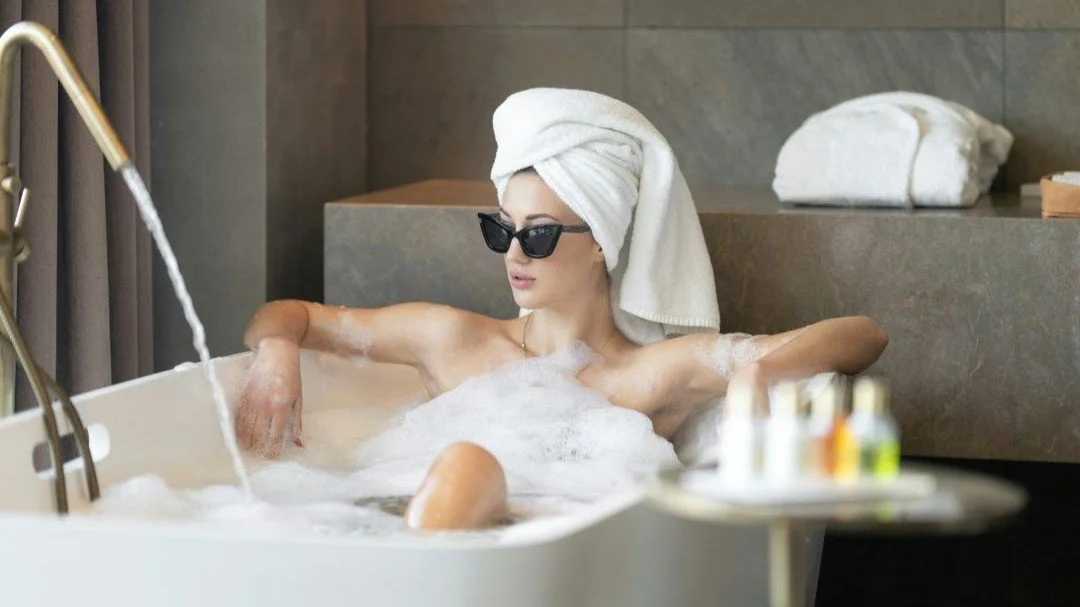
Self-care is big right now. Is that a good thing? The explosive popularity of self-care is a double-edged sword, and it may be negatively impacting you.
The buzziness of self-care does a lot of good by giving us shared language for prioritizing things that make us feel well. I can say from experience that self-care just wasn't talked about when I was growing up, and I appreciate that my son now lives in a world where his peers and teachers are at least familiar with the idea. But this increased awareness has come at a cost.
Self-care's popularity has a darker side, including stoking fears that one isn't getting enough of it, doing it right, or working hard enough to fit it in. Self-care + social media can equal self-care fomo, where we feel pressure to show everyone else just how much you take care of yourself! Plus, there's a massive self-care industry, worth over a trillion dollars by some estimates, so we're not just talking about you taking a bath. A lot of people are making a lot of money off of making you feel like you need that bath, and they're hoping that you buy their brand of bath bombs, use their app to stay on top of your bath taking, and tell/shame all your friends about it.
That said, you do need the bath! (Or its equivalent.) Taking care of oneself is essential to survival, perhaps never more so than now. I recently coached a client about the difference between self-care and just straight-up human needs and realized that she had come to think of self-care as a sort of indulgence: a reward for hard work. A Google search for "examples of self-care" yields "sleep," "drinking water," "exercise," and "connect with others." These are also things a human needs in order not to die.
If you need it to survive, it's not a treat. Alleged "self-care" such as downtime shouldn't be something we forcefully wedge into our already busy days: it's an equal and opposite reaction to all of the overwork, isolation, and overstimulation so many of us endure each day. Without it, we're not just neglecting our photogenic self-care routine; we're disrupting our homeostasis, on a literal, biological level. Pumping out all those hyperarousal brain chemicals in front of a screen all day while not being nourished by evolutionary givens like connection to nature and social interactions takes a very real toll.
Putting self-care in the "treat yourself" category therefore assumes a cruel irony. Consider if we applied the same perspective to other human necessities: treat yourself to seeing another person this week. Treat yourself to food. Treat yourself to not being bombarded with commercialized doom from the addictive device in your pocket at all moments of the day.
Our ancestors may have been badass mammoth hunters, but they wouldn't last a day in our shoes. (For one thing, they would be confused about the shoes.) So don't treat yourself - feed yourself. What you actually need in order to survive. As a life / career coach, I've seen what happens to people suffering from burnout, and it isn't pretty. Yes you need to check your privilege and do your part to challenge inequality. But self-care isn't inherently self-ish. If you burn out, we all lose.
I often invite clients to pause and take a moment to consider what they truly need. Sometimes, just taking the pause is a radical act. Apparently, without the invitation to do so during a designated coaching session set apart from the whirligig of the rest of the day, many of us will never stop to think about what is necessary for our vital functioning.
And so I invite you to take that pause right now.
What are your actual needs? Without shame or judgement. Do you need more sleep? Do you need to move your body? To feel the sun on your face? What will help you continue to survive and thrive?
If you never ask, you'll never know.
______________________________________
Interested in exploring these concepts in your life or work? Get in touch for a free, 20 minute coaching consultation.
[photo via Unsplash]
