Making Meaning: Life, death, and maple syrup
One of the most powerful sources of meaning in my life is my connection to nature, and my favorite way to connect to nature is eating it.
By tasting a part of the natural world, I shift from observer to participant. It’s the difference between looking at a painting and stepping into one.
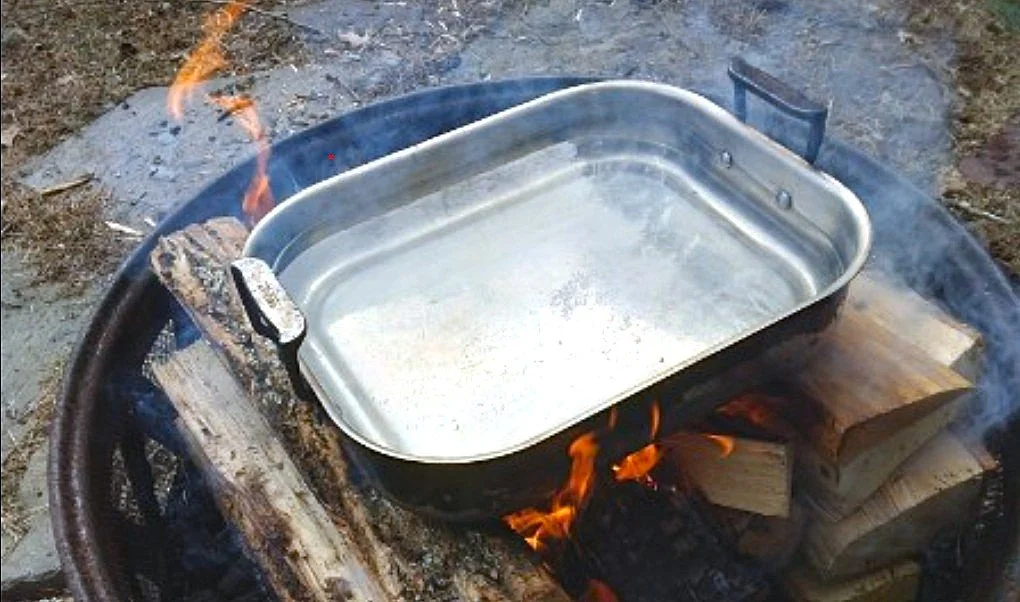
I have a single maple tree in my yard, and my son and I tap it every spring. We get about a pint of syrup from the significant effort of collecting sap, hauling it in buckets to the fire pit, and boiling it down over the course of a couple of days. So you could say that we’re not in it for production, although that depends on your definition of production. We may not produce enough syrup each year to sell, or even to make a significant impact on our family’s caloric needs. But it feeds the soul a great many calories.
Like so many things, it depends on how you perceive value.
My internalized capitalism is quick to chide me for taking too long of a break during the day, or for talking on the phone to old friends when I should be responding to emails. It doesn’t even like me writing this blog post! And it certainly doesn’t like when I make something like syrup that can’t be converted into currency. But if that’s the only voice I listen to, I quickly become nothing but efficient, and it isn’t pretty. It’s also called burnout.
One trend I’ve noticed across coaching sessions is a lack of meaning, or rather a distancing from it. This could look like meeting your professional goals but being left with an empty feeling, or a lack of clarity about why you get up every day. Sometimes the approach is additive, addressing what’s missing in your life. Sometimes it’s about getting rid of the clutter and coming back to what feels essential.
Maple sap comes out of the tree much like water, with a faint hint of the flavor hidden within. Which is why it takes about 40 gallons of sap to make a single gallon of syrup. The two main costs involved in making syrup are labor - the drilling, tapping, hauling - and all the fuel it takes to cook off those unwanted 39 gallons. The syrup is in there, but like Michelangelo revealing the sculpture from within the block of stone, you’ve got to work to reveal it.
To me, making syrup is something of a spring cleanse. We gather up all of the sticks from the yard, and all the downed limbs from winter storms. Determined not to buy firewood, we search the nearby woods and the edges of the neighbor’s yards for any available fuel. It’s not unlike the hunt for chametz that we do around the same time of year for the Jewish holiday of Passover. In this ritual, the house is searched for crumbs in order to purge the home of any potential leavening, whose avoidance is part of observing the holiday (hence eating flat matzah instead of poofy bread). Traditionally, the crumbs are swept onto a wooden spoon and then tossed into the fire - more fuel for making syrup.
As I sit watching the fire, I try to feel what is old burn away as it makes room for what is new. To do so, I must endeavor to put ordinary things out of my mind and surrender to the timeline of the syrup, collecting the sap at the one time of year that it flows (you need freezing nights and above-freezing days), cooking it down before it spoils, and on a dry enough day to get a fire going. All things not up to me.
While the water in the sap evaporates, I meditate on the elemental nature of life and death. The white clouds of steam mingle in the air with the dark smoke. The fire below consumes the pieces of the trees that have died as the sap bubbles into something sweet and delicious that helps keep us alive. When we think about spring, we tend to focus on the blossoms and baby animals, but there’s no spring without winter, no life without death. Spring is a highly dualistic season, beginning in icy darkness and ending in strawberries. It’s why on Passover we also dip parsley in salt water: to remember our tears as we rejoice in the fresh and green and vibrant.
Snow, fire, sap, steam, syrup. Sweetness and ash.
My internalized capitalism hates when I make maple syrup. But my son loves it.
If you feel more like sap than syrup, I suspect you can boil down to a greater sense of meaning.
